The sumo show with an audience challenge
A 1.5-hour show by retired wrestlers in Nishinari: history and rituals, training, techniques, a one-round bout and a ring challenge for a few guests.
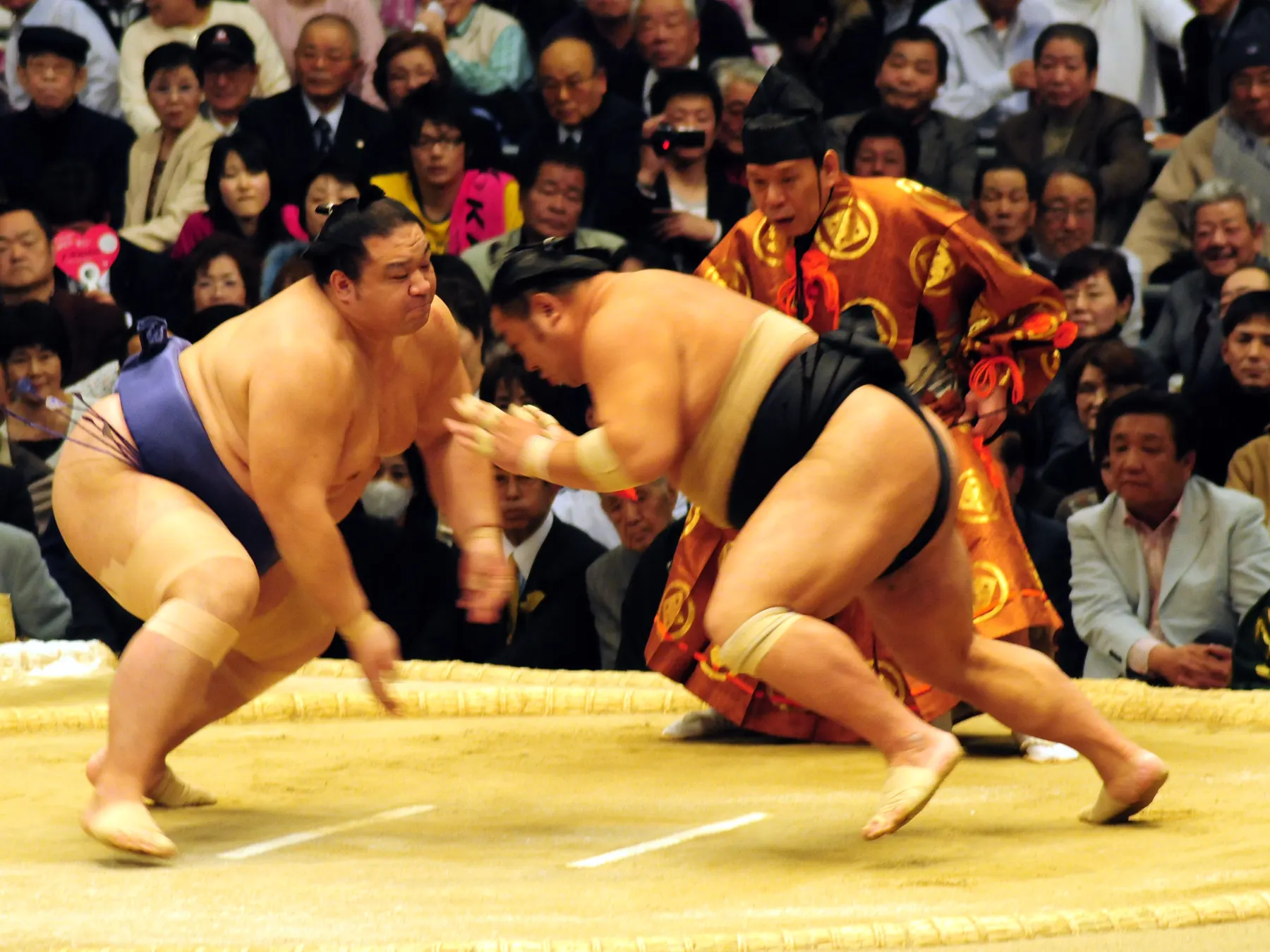
Nishinari · Osaka
Former wrestlers walk you through sumo’s rituals and techniques, then fight a one-round bout a few metres away.
Guests love the wrestlers’ humour, and watching brave volunteers try their luck against them in the ring.
The Osaka Grand Tournament is a separate event held in March at a different arena, in Namba. This show is in Nishinari.
Is it real sumo?
The wrestlers are real and retired, and the sumo is real, but this is an entertainment show, not a tournament. The listing says retired wrestlers demonstrate sumo's history and rituals, training, famous techniques and a one-round match, and a few guests can take on a wrestler. Ranked bouts belong to the six Grand Tournaments each year, and Osaka's is in March. Come to understand sumo; go to a tournament to watch it decided.
A hosted 1.5-hour show in a studio in Nishinari, with an English-speaking MC. It runs from sumo’s history and rituals through a training demonstration and famous techniques to a single bout, and ends with a ring challenge for a few guests. The venue is wheelchair accessible, the listing says.
Not a tournament, with no rankings and no fifteen-day contest. Not a stable visit: the listing says active stable visits are a Tokyo matter. Not a guaranteed turn in the ring, since spots are limited. And not in Namba: it is in Nishinari, south of the Namba hub.
The listing says it suits fans and complete beginners. It fits first-timers who want the terms explained in English, families and mixed groups who can watch or take part, and visitors outside March who cannot see a tournament.
The show in four lines
The show, part by part
The listing describes five parts. The exact order and what each contains can vary, so take this as an outline of the show, not a script.
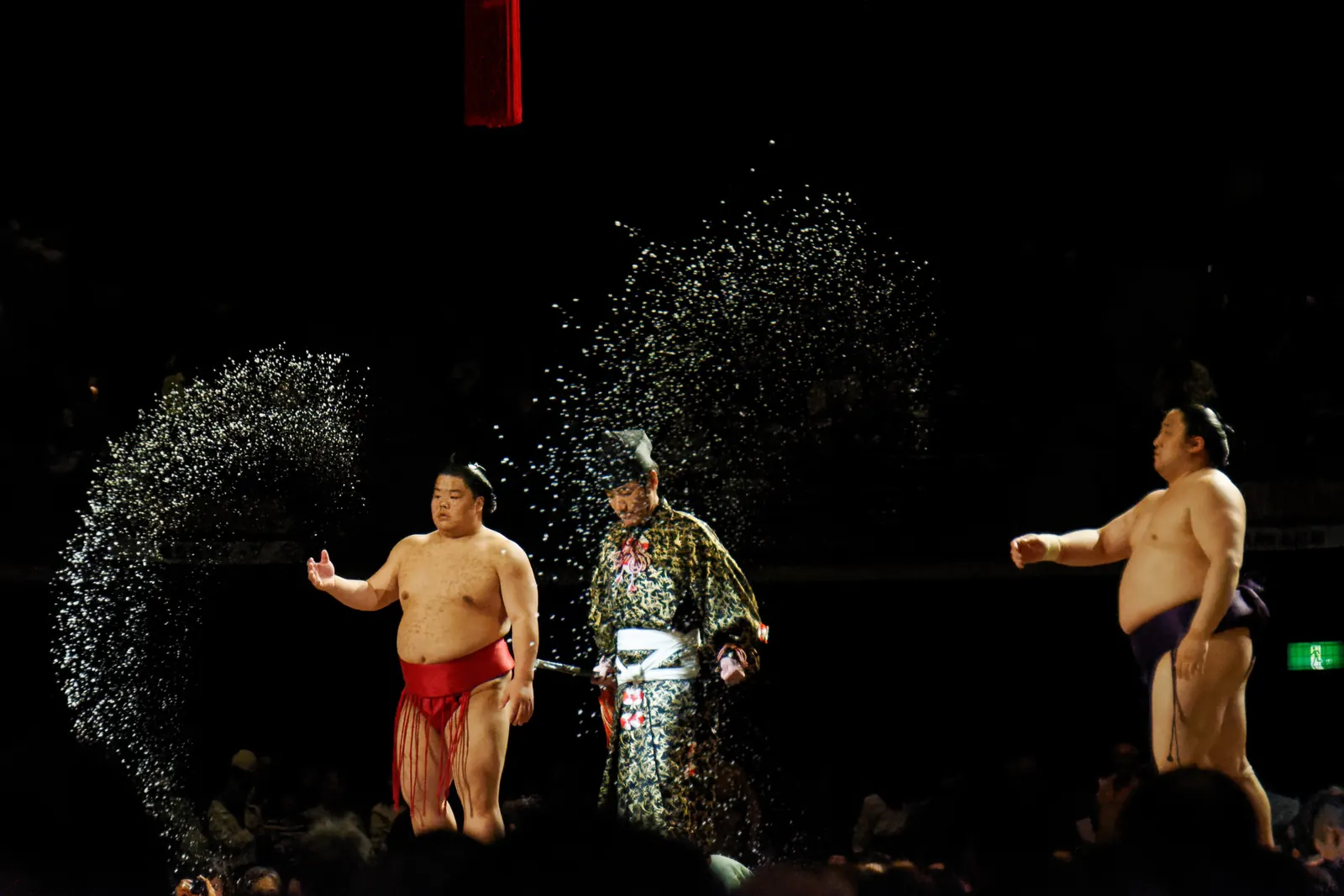
The listing promises sumo's history, sacred rituals and signature techniques. Wikipedia explains that salt thrown into the ring is a symbolic cleansing, and that wrestlers rinse the mouth with power water, like the rite before entering a Shinto shrine.
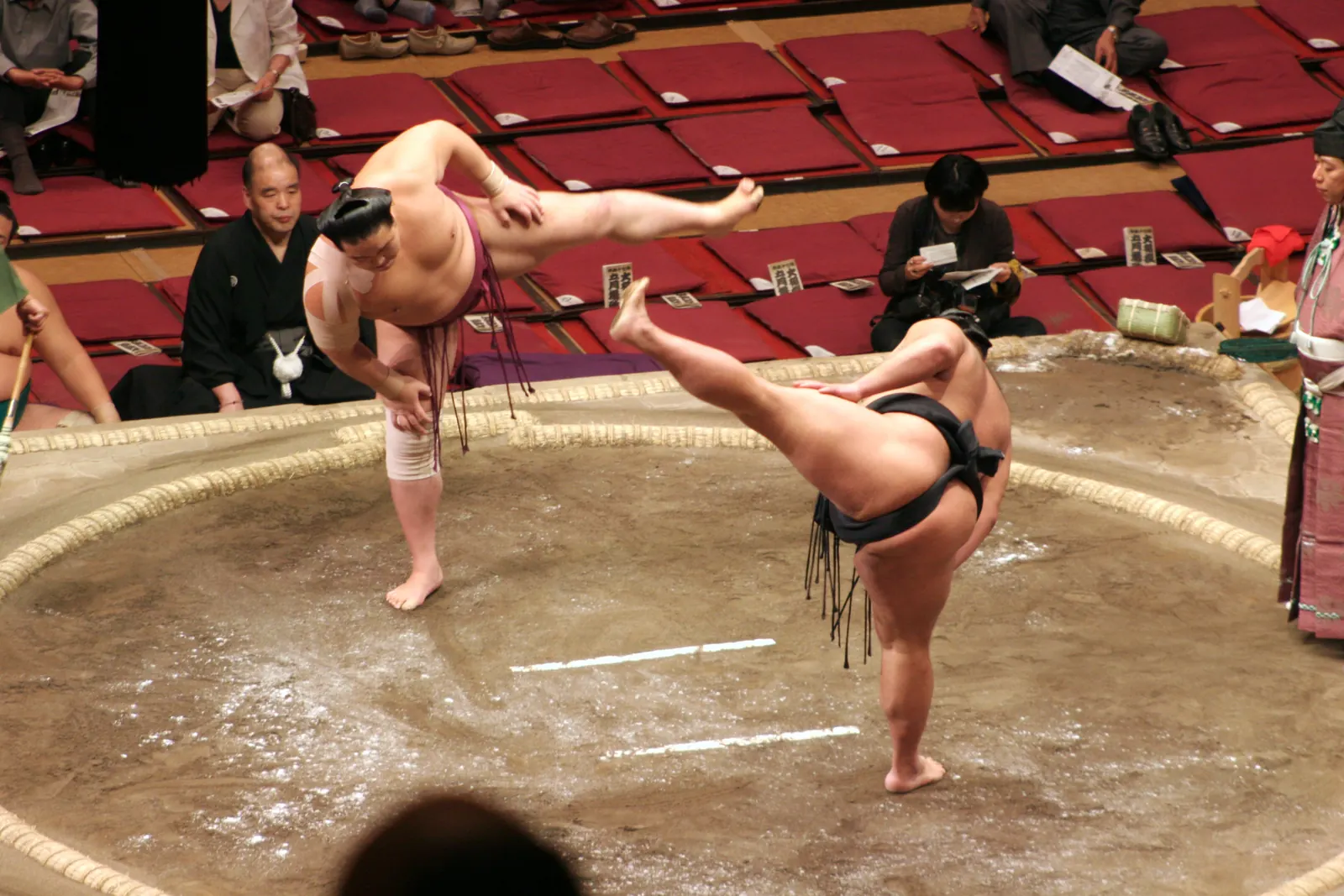
Wikipedia's glossary describes shiko, the exercise where each leg is raised high and stamped down, repeated hundreds of times in training. The listing includes training routines but does not name which exercises the show demonstrates.
The Japan Sumo Association recognises 82 winning techniques, Wikipedia says, though only about a dozen are used often. The listing says famous techniques are shown and does not say which.
The listing describes a single-bout match between retired wrestlers. Tachiai is the term for the initial charge that starts a bout, from the Japanese for stand and meet, Wikipedia says. The listing gives no length for the bout.
A few guests who wish to can go into the ring against a wrestler. The listing says places are limited and does not say how they are given out, so do not book on the promise of a turn.
Wrestlers, programmes and the number of challenge places vary. Nothing here promises a particular bout or a turn in the ring.
What you are booking
Six terms from the booking page, to read before you commit to a date.
Photographs
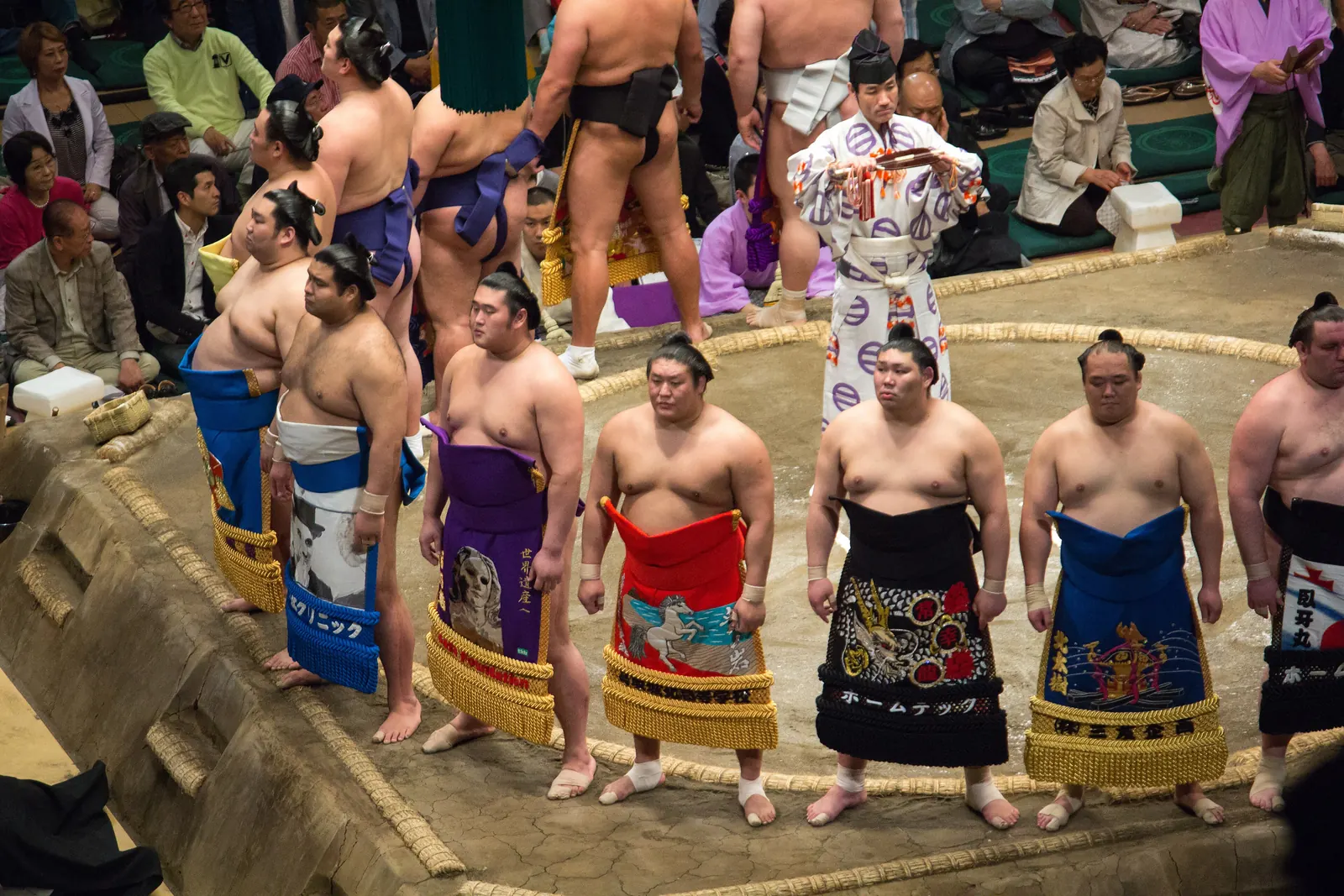
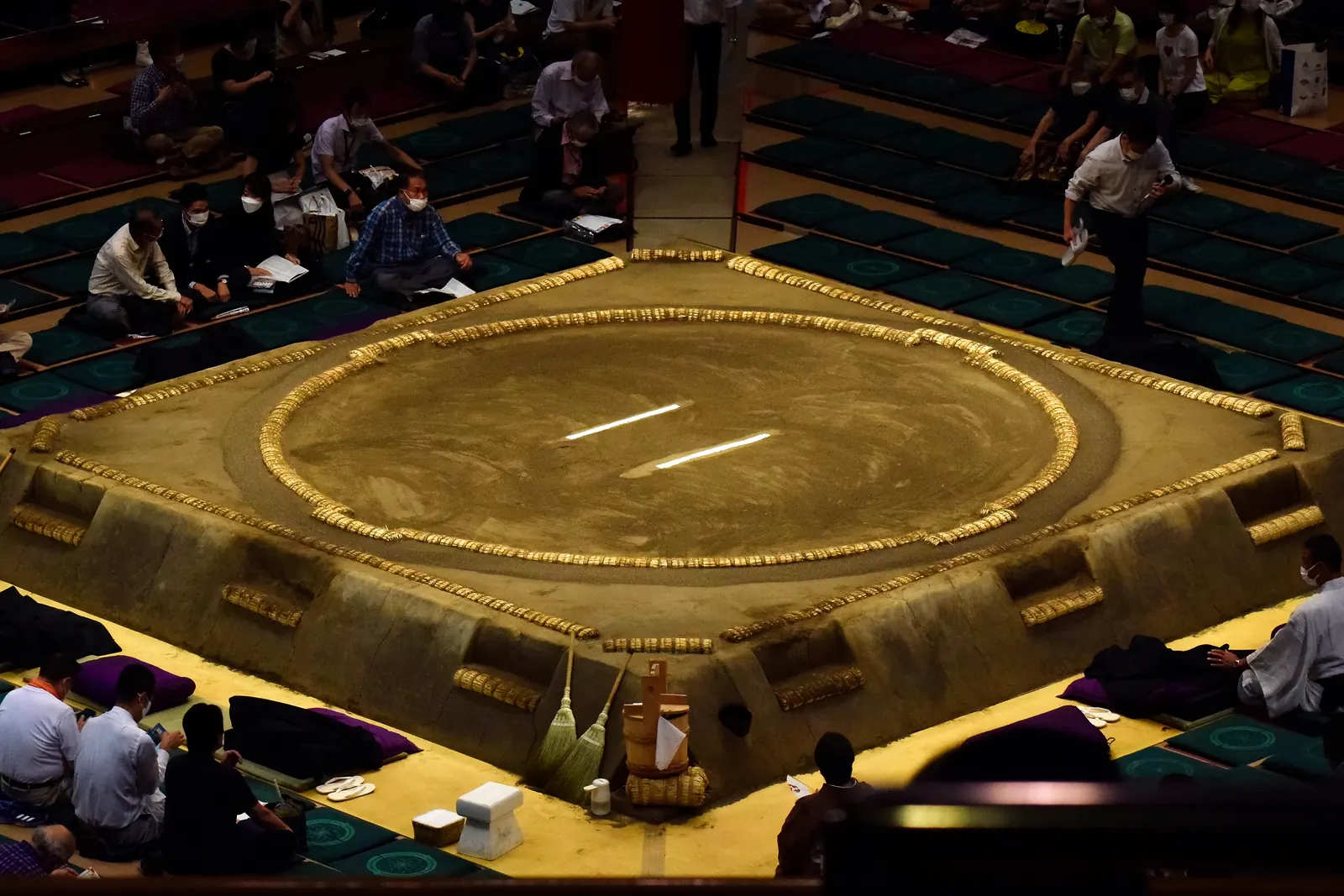
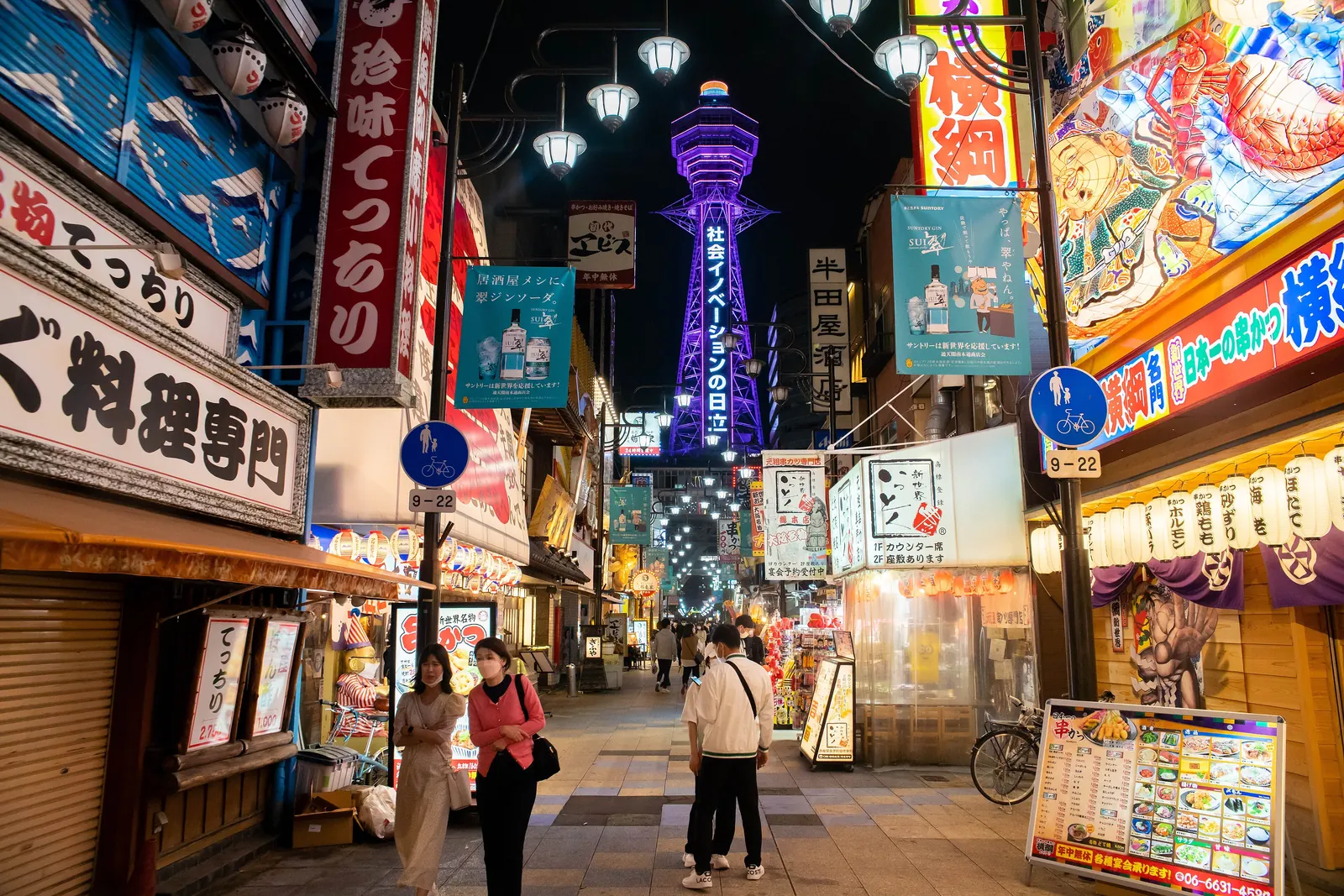
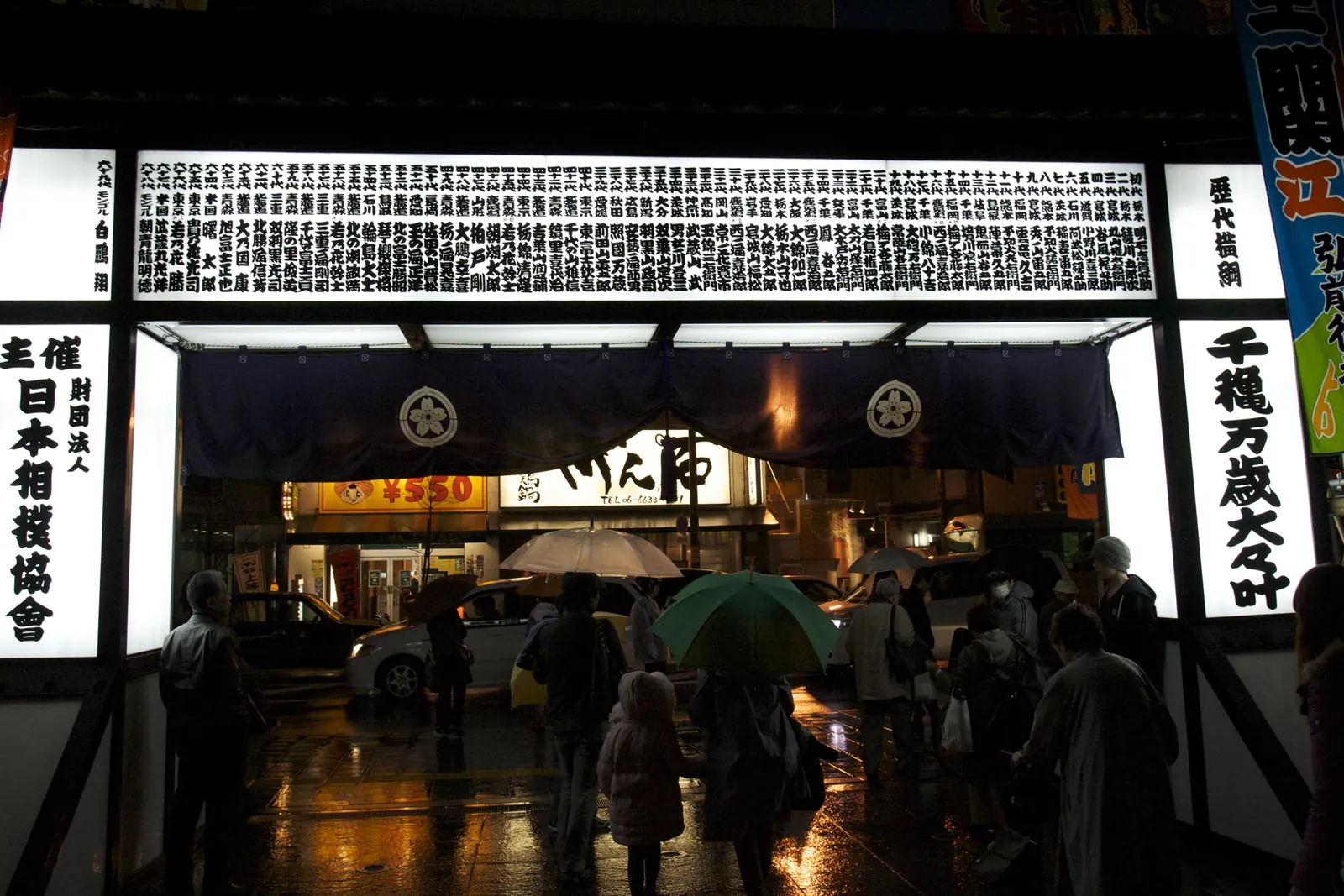
These photographs show sumo and Osaka in general: salt thrown into a ring, a ring-entering ceremony at a Tokyo tournament, a leg-raising stomp, a bare ring, Shinsekai at night and the March tournament venue in Osaka. None is from the studio show.
Where to spend a sumo day in Osaka
The first card is the studio show this guide covers. The second is the Hirakuza show in Namba Parks, with a meal and different terms. The third is another show in Nishinari, and the fourth is a street-food tour of Shinsekai nearby.
A 1.5-hour show by retired wrestlers in Nishinari: history and rituals, training, techniques, a one-round bout and a ring challenge for a few guests.
A show in Namba Parks that comes with a bento or snack, a photo and a challenge decided by lottery. The booking page lists it as non-refundable.
A second show in Nishinari whose listing says ex-pro wrestlers and a ring challenge. Compare its terms with the studio show before you choose.
A guided food tour of Shinsekai, the neighbourhood beside Nishinari, for the meal the studio show does not list.
More to do in Osaka
Practical notes
The meeting point on the listing is the AI Building, Asahi 1-5-1, in Nishinari Ward, Osaka. Check the map on your confirmation before you set out.
Wikipedia describes Nishinari as lying directly south of the Namba transport hub, with Shinsekai on its northern border. The show is not in Namba, where the Hirakuza show and the March tournament arena are.
Wikipedia's access list for Tsutenkaku names Shin-Imamiya, Ebisucho and Dobutsuen-mae stations. These serve Shinsekai; your confirmation shows how far the meeting point is from each, so check before you choose.
Open the calendar on the booking page to see starting times for your date. Each date has its own slots on the calendar, so confirm yours before you organise anything else that day.
Shinsekai is known for kushikatsu, breaded and fried skewers, Wikipedia says, and for the Tsutenkaku tower. A guided street-food tour of the area is among the cards on this page, for the meal the show does not list.
The Hirakuza show in Namba Parks comes with a bento or snack and is non-refundable. The March Grand Tournament at EDION Arena Osaka is the competition itself, and tickets come from the ticket sites the Japan Sumo Association names.
More reading
FAQ
The wrestlers are real and retired, but the show is entertainment, not a tournament. The listing describes sumo history and rituals, training, famous techniques, a one-round match and a ring challenge, with an English-speaking MC.
Neither. Tournaments are the six Grand Tournaments each year, and Osaka's is in March in Namba. The listing says active stable visits are a Tokyo matter.
A few guests can go into the ring against a wrestler, but the listing says places are limited. It does not say how they are chosen, so do not book on the promise of a turn.
At the AI Building, Asahi 1-5-1, in Nishinari Ward, in the south of Osaka. It is not in Namba.
The Hirakuza show is in Namba Parks, includes a bento or snack, decides its challenge by lottery and is non-refundable. The studio show lists limited challenge spots and free cancellation until 24 hours beforehand.
It runs about 1.5 hours with an English-speaking MC, and the listing says the venue is wheelchair accessible.
The GetYourGuide booking lists free cancellation until 24 hours beforehand, and reserve now, pay later. Check your confirmation for the terms on your date.
Yes, in March. The Japan Sumo Association's schedule lists the March Tournament at EDION Arena Osaka, with tickets sold through its own ticket sites.
The calendar shows the price in your own currency before you pay.